This presentation was given at the Weld County Republican Breakfast on 29 October 2014, and has been modified slightly to make sense in this format (there are a lot more pictures in the linked PowerPoint).

Overview
- Brief history of the Reformation (Part 1)
- The role of church in politics (Part 1)
- Millennials in the church and in politics (Part 2)
- Messaging (Part 3)
- What does this mean? (Part 4)
- The new (political) Reformation (Part 4)
Brief History of the Reformation

The Reformation was a seminal moment in world history. It is easily in the top 5 most important, impactful events to ever occur.
 While there are many players in the Reformation, for the purposes of this presentation, we are focused on the Reverend Doctor Martin Luther, a German Augustinian Monk and author of the 95 Theses, who, on October 31, 1517 (now celebrated as Reformation Day by Lutherans worldwide) at the Wittenberg Castle Church Door in Wittenberg, German, where, today, they have a door with the 95 Theses carved into them at the exact spot where the Rev. Dr. Luther nailed these theses, written in Latin, to expose the teachings of the Catholic Church, primarily on the selling of indulgences and, secondarily, on the doctrinal policies about purgatory, particular judgement, and the authority of the Pope.
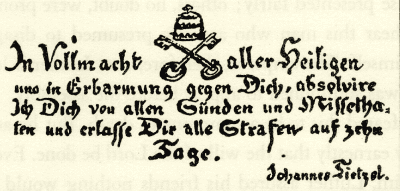
The selling of these indulgences was to pay for the reconstruction of St. Peter's Basilica in Rome. The sale of indulgences for this purpose occurred under Pope Leo X, although half of the money from the sale of indulgences went to the Archbishop of Mainz, Cardinal Albrecht of Brandenberg (who was Tietzel's direct superior) in order to pay off the debts he incurred securing his seat as an Archbishop.

“27. They preach only human doctrines who say that as soon as the money clinks into the money chest, the soul flies out of purgatory.”
“28. It is certain that when money clinks in the money chest, greed and avarice can be increased; but when the church intercedes, the result is in the hands of God alone.”
Why does this matter?
Rev. Dr. Luther wanted an academic debate. This is why the theses were written in Latin. However… that was never to be, due to the translation into German and wide distribution of the 95 Theses that caused an absolutely firestorm. The result? Well, it had an impact far beyond just theological reform.Cultural

- Immense increase in literacy
- Drastic change in church services (in native language instead of Latin, congregant participation, sacrament accessibility, etc.)
- Expanded educational opportunities for all (including for women and children)
- Opening Scripture to laymen
- Emphasis on marriage and the family

Additionally, this piece of machinery absolutely revolutionized the Reformation. The printing press was literally the social media of the day, and Luther seized upon that. There was an excellent article in The Economist a few years ago that talked about this.


 The Fourth Commandment ("Thou shalt honor thy father and thy mother") establishes all authority and is the font of societal order and the foundation of all other commandments following.
Continued in Part 2, Part 3, and Part 4.
“It's also what happened during the Reformation, nearly 500 years ago, when Martin Luther and his allies took the new media of their day—pamphlets, ballads and woodcuts—and circulated them through social networks to promote their message of religious reform.
Scholars have long debated the relative importance of printed media, oral transmission and images in rallying popular support for the Reformation. Some have championed the central role of printing, a relatively new technology at the time. Opponents of this view emphasise the importance of preaching and other forms of oral transmission. More recently historians have highlighted the role of media as a means of social signalling and co-ordinating public opinion in the Reformation.
Now the internet offers a new perspective on this long-running debate, namely that the important factor was not the printing press itself (which had been around since the 1450s), but the wider system of media sharing along social networks—what is called “social media” today. Luther… grasped the dynamics of this new media environment very quickly, and saw how it could spread his message.” (How Luther Went Viral, The Economist, December 17, 2011)
Economic and Political
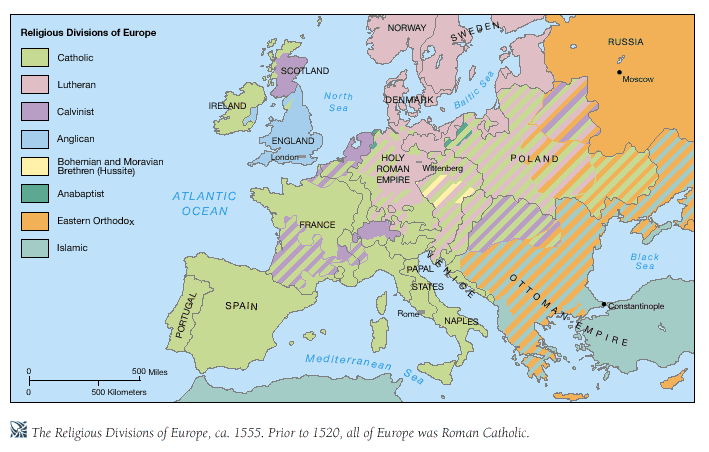
- Europe became politically fragmented along religious lines
- Rejection of religious “authorities” by monarchs
- Many citizens challenging the idea of “divine right” of monarchs
- Secularization of politics (separation of church and state—up until this time, the state was almost always associated in some way with religion)
- Weakening of the Holy Roman Empire and rise of the nation-states in Europe
- A lot of wars (not that this was anything new)
- Rise of Capitalism
Social
- Rise of individualism—economic, political, and social
- Encouragement of intellectualism and the renaissance
- Strengthened middle class
- Poor classes began to demand reforms for themselves (e.g. German Peasant’s War, 1525)
- Rise of a more democratic vs. feudal form of government across Europe
The Role of Church in Politics
As much as I’d like to stay out of the theological weeds, I would be very remiss if I didn’t briefly go over one of the greatest theological triumphs of the Reformation: the distinctly Lutheran doctrine of the Three Estates and Two Kingdoms Theology.
Three Estates
Estates are the ordering of society.
For more about the role of Christians in government and voting, I highly recommend this resource from my Pastor, Bryan Wolfmueller, called the Voters Guild to the Ten Commandments.
The three Estates are:
- 1st: Family - parents –> children
- Foremost estate of human society—the primary building block
- 2nd: Church - preacher –> preachee (hearer)
- Also deals with the 3rd commandment
- Canonical governance, means of disseminating Law and Gospel
- 3rd: State - ruler –> ruled
- Civil governance (derived from family)
- Unlike the other two estates, the structure of the state is complex, although overly simplified, it becomes ruler and ruled; unique caveat with constitutional representative government system (like America)
Two Kingdoms Theology
I've written about this here and here and here and here, but below is a brief reminder of the divisions of the Two Kingdoms:
Left-hand Kingdom
|
Right-hand Kingdom
|
Kingdom of Man (State)
|
Kingdom of God (Church)
|
Law
|
Gospel
|
Sword: Internal and External
|
Word, no sword
|
Power
|
Grace
|
Exists for Order and Justice
|
Exists for Mercy
|
External Righteousness
|
Internal Righteousness
|
Realm of Morals
|
Realm of Faith
|
Ruled by Reason
|
Ruled by Scripture
|
Please note: all pictures were found via google image search, all I did was crop and add text.